
 Image 1 of 2
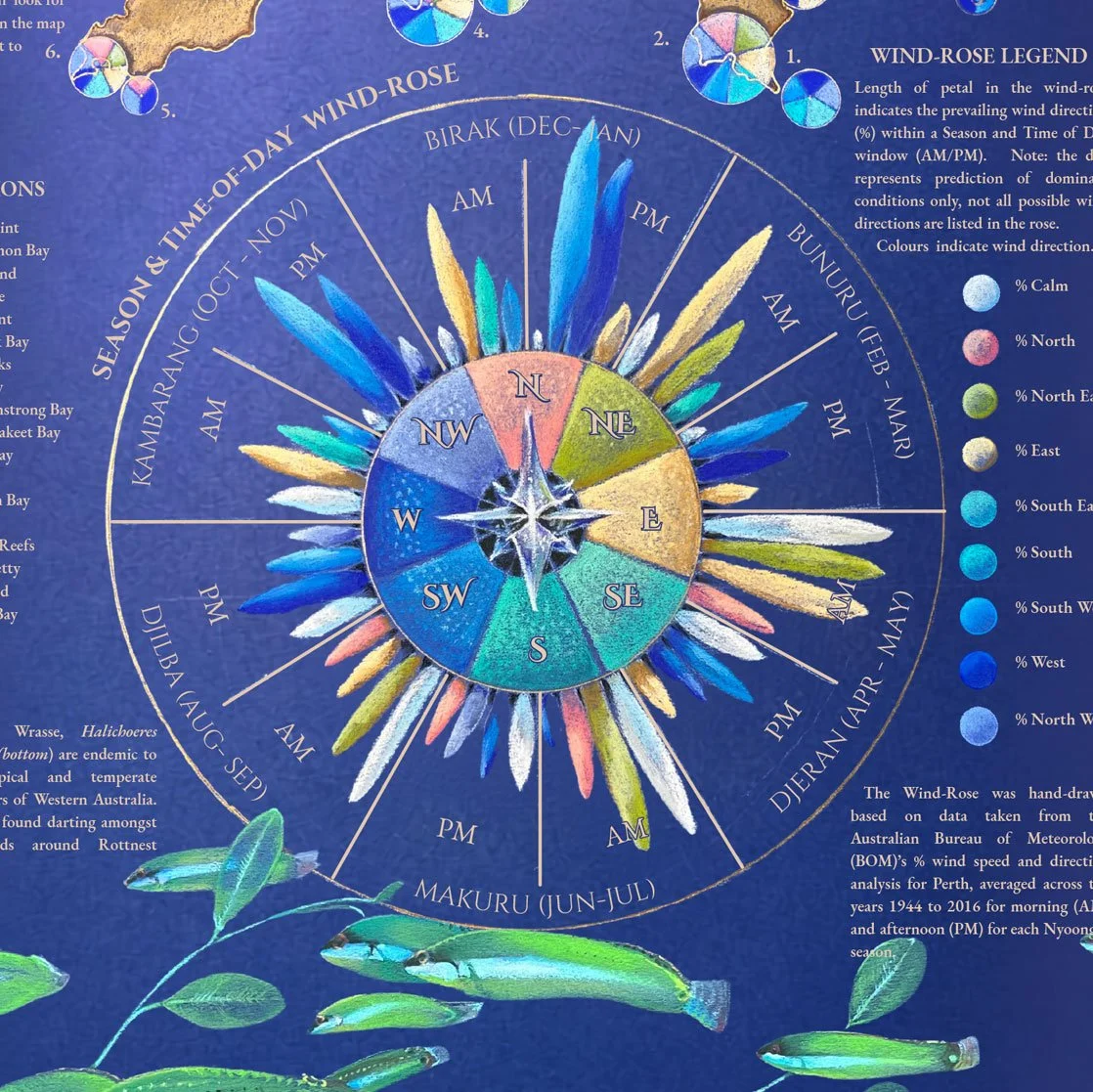 Image 2 of 2
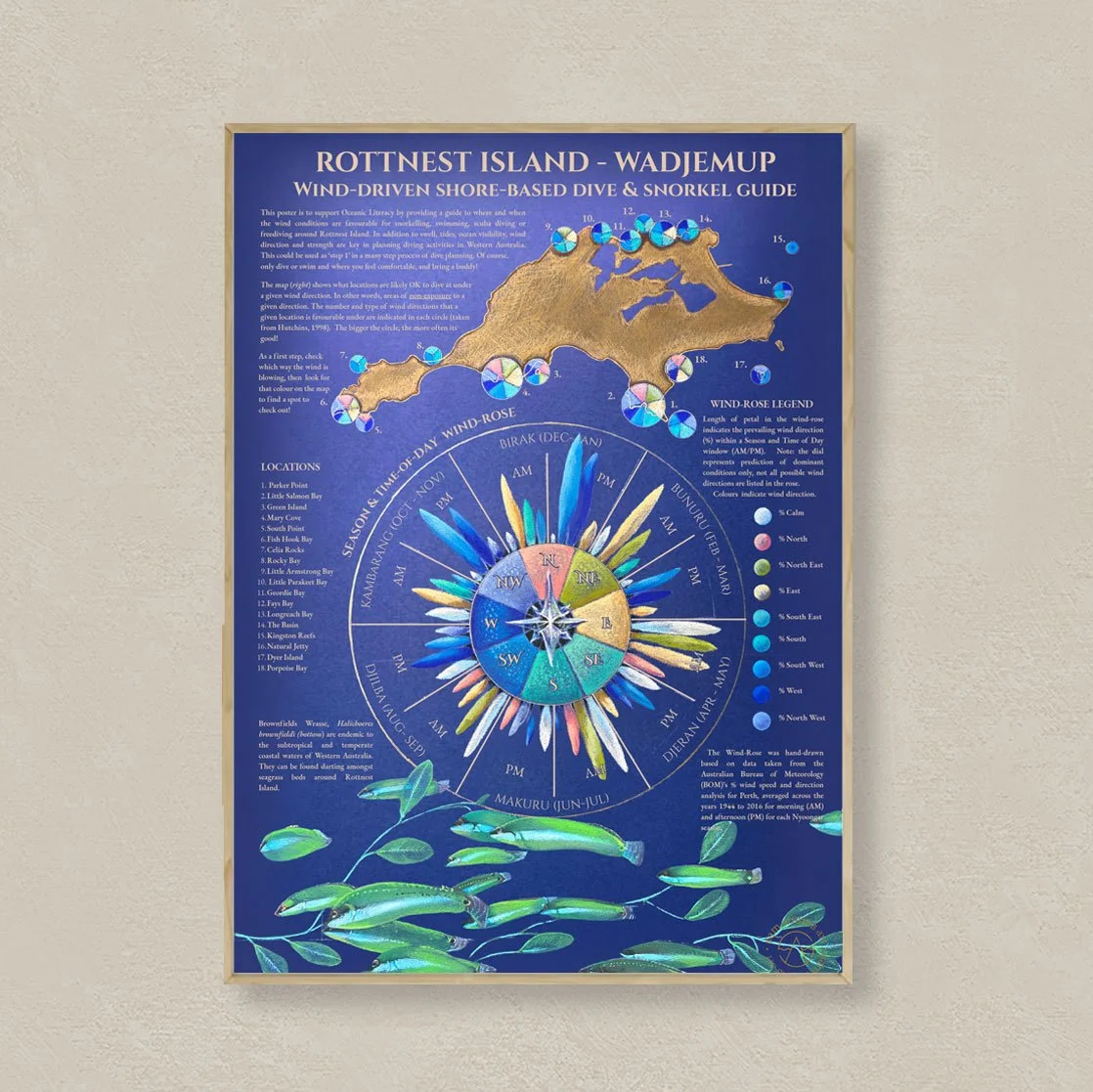
Type ‘where can I go snorkelling at Rottnest Island’ into Google and you’ll find it a common question, but it doesn’t have a straightforward answer. It often depends on which way the wind is blowing, and its interaction with the unique geography of Wadjemup - Rottnest Island. Weather apps alone can’t answer this one, but this poster might help.
This poster builds on, and makes accessible the fantastic work by Dr Barry Hutchins in his (1998) Snorkeller’s Guide to Rottnest (Swainston Publishing) - where the colours on the map have been built from the much-shared table on page 13 that indicate where is ‘OK’ to dive under moderate to fresh wind conditions.
This work follows in the tradition of John Snow, whose hand-drawn map traced the London Cholera outbreak back to a single Soho well in 1854, persuading authorities to remove the pump handle, and as a result - saving countless lives. It takes us back to where important questions were answered by careful observation of our environment and pencils, when art was a respected means to communicate critical information. Rather than constantly asking Google – why not use a piece of art that bring both answers, and beauty, into your life? Here, you’ll also see a hand-drawn wind-rose of the dominant winds in the morning and afternoon for each Noongar season, including when it’s calm. This has been hand-drawn based on over 70 years of BOM wind data, so you have a sense of what to expect, and when. And of course, my favourite wrasse (Brownfields wrasse), who you’ll find darting amongst the seagrass beds.
Excluding the text, all elements in this poster were hand-drawn using pastel pencils and metallic copper ink on blue pastel paper. The colours chosen reflect those of Wadjemup and surrounding sea country; pink of the salt lakes, mauve for the purple wildflowers, the salty-green of the island vegetation, soft yellow of the limestone, and the beautiful aquas and blues of the Indian Ocean.
Size: A2 (42 cm by 59.4cm) - printed on 180gsm high quality gloss stock - makes for a colourful addition to your wall.